Leadership training and governance frameworks are undergoing a fundamental shift. Traditional static models — built for predictable risks and linear decision‑making — are struggling to keep pace with the realities of artificial intelligence (AI).
AI in enterprise introduces a new category of risk: systems that can operate with autonomy, learn dynamically, and influence outcomes across business functions. This requires leaders to rethink governance not as a defensive mechanism, but as a strategic lever for resilience and growth.
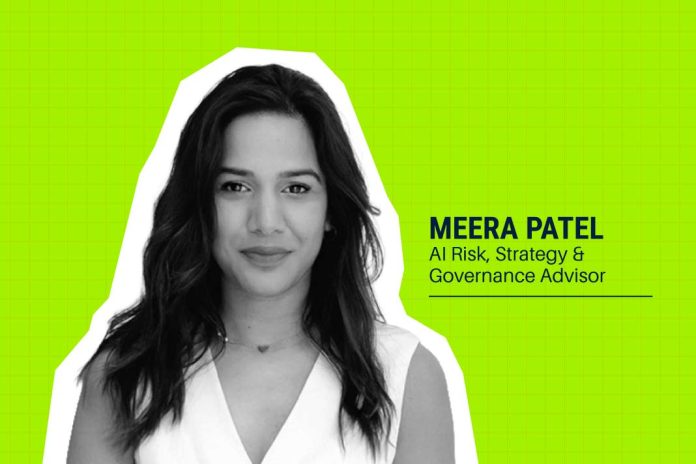
“Those treating AI governance as a strategic capability giving business the confidence to scale and grow – instead of just as a compliance burden – will succeed,” says Meera Patel, a corporate lawyer turned AI governance, risk and regulation advisor who works with C-suite leaders on decision-making within complexity.
We spoke with Patel about rethinking AI governance as a strategic lever for growth, managing the liability of autonomous agents, and what it takes to lead in an era of compressed insight and execution.
Tell us a bit about your journey from being a lawyer, business strategist, and author, to an advisor for corporate governance in enterprise. How did this happen?
My career sits at the intersection of law and business strategy, and has always been at the forefront of innovation.
I started at Latham & Watkins during the early days of US law-firms opening up in London; this is where I qualified as a corporate lawyer and built my foundations. From there I moved into the Big 4 (EY, then Deloitte) to build an entrepreneurial-style legal-career. Here, in addition to client-facing advisory, I was building commercial business units within innovative spaces. These businesses typically are being built during moments of disruption and global regulatory shifts – for example, Brexit, Covid19-business restructurings and, at present, AI and digital regulation.
I went from being a legal expert to someone who also understands how regulation, risk and innovation interact in real-time, and more importantly, how this translates commercially for global organisations to keep pace.
Over time within the Big 4, I scaled £M+ consulting business units and advised C-suite leaders on decision-making within complexity. Today, my work sits within advising companies navigating AI governance, risk and strategy, whilst also meeting and working with incredible individuals and organisations who are rising to meet the moment.
My book and brand, Get Into Law, is about self-leadership, and responds to a more human purpose – helping the next generation of legal professionals unlock their highest potential in the AI-era.
ALSO READ: Regulation Actioned: Inside Corlytics’ Approach to Responsible RegTech
What’s a common challenge you help advise corporate leaders on when it comes to AI governance, risk and compliance frameworks?
The most common challenge is often conceptual – leaders are learning how to switch from static governance models to ones that now work in the AI era.
AI introduces a new category of risk and systems that can operate with a degree of autonomy. Therefore, traditional frameworks may struggle to keep pace – especially with what we are now seeing emerge: themes such as continuous regulatory monitoring and much more cross-functional (legal, engineering, product, risk and operations) interaction and decisions across business organisations. In my view, those treating AI governance as a strategic capability giving business the confidence to scale and grow – instead of just as a compliance burden – will succeed.
What is the one thing critical for business leaders to know regarding AI agents and their legal implications?
AI agents don’t just generate insights – they take actions and make decisions. This changes and adds a new risk profile for business leaders to consider, as you are dealing with agents who have a degree of operational autonomy.
Business leaders are considering the additional governance, controls and contractual practice aspects to maintain the resilience needed to safely deploy AI agents with business-use cases. For example, in the consumer sector, from a contractual perspective, it may become important to check who holds liability if an AI agent incorrectly authorises a refund or misprices a product. From a governance perspective, it becomes necessary to determine what levels of authority are given to AI agents in certain contexts and whether to build agentic policies and protocols.
ALSO READ: Building an AI-Ready Leadership Culture: Inside Raja Sampathi’s Transformation Framework
In which industries are you seeing the most positive impact of AI application, and what excites you about the potential?
We are seeing exciting potential across many industries. For example, in legal and professional services, AI is accelerating due diligence, research, and document automation. In financial services, there is impact on operational efficiencies and within healthcare, we are seeing it in early detection and diagnostics.
What’s exciting is not just the efficiency and speed – but that AI is elevating the baseline. AI is extending what individuals and organisations are capable of processing and acting on it in real-time. Time between insight and execution is compressed and the baseline ultimately gets raised. Organisations that learn to effectively collaborate with AI and utilise it in a trustworthy and responsible way will compound advantages rapidly. In my view, AI is not just a productivity shift but the creation of an infrastructure layer within existing structures to provide competitive advantage.
How can business leaders grow their skills to accommodate the new reality of AI in the workforce? What kind of skills or values will it take to be safe and successful?
For business leaders, AI literacy goes beyond just technical knowledge and includes the ability to understand where AI is being used, how it is influencing outcomes, and where human accountability is still needed.
The types of capabilities which become valuable are:
(1) The ability to define problems with enough precision that the AI system can be effectively directed.
(2) Having commercial judgement to determine what matters:
Whilst AI can generate options and solutions, leaders must still be effectively balancing human trust, risk, opportunity, timing and real-world conditions.
(3) In environments where outputs are super fast and we are becoming more reliant on automation, we need to maintain clarity, confidence, and connection to ourselves to succeed.
The new reality of AI in the workforce will need leaders who are both AI-literate decision makers and who can also remain confident and decisively human amongst it all.
Tell us about your book, the audience and what takeaways they can expect.
Get Into Law at its core is a book about self-leadership – for unlocking your highest potential and finding your unique success within the legal industry. It is written for ambitious individuals who want to achieve this but may not yet have the frameworks to do so.
What makes the book different is that it is not just a guide – but a mindset – bridging ambition with transformative personal development tools. Get Into Law takes the reader through a 10-step self-development formula through sharing my own personal stories. It is a mindset that is increasingly relevant, especially as the industry is being reshaped by AI. The next generation of leaders embracing this will be those leading the AI era.
ALSO READ: Middle East: The Sovereign AI Testbed US, EU and Asia Can Learn From