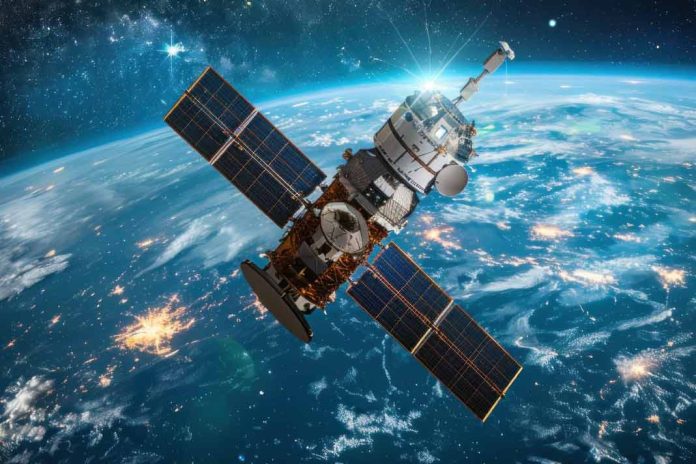
NVIDIA-backed startup Starcloud has successfully trained and run LLMs from space for the first time, a step toward orbital data centres as demand for computing power and energy grows on Earth.
The Washington-based company’s Starcloud-1 satellite, launched last month with an NVIDIA H100 GPU, has completed training of Andrej Karpathy’s nano-GPT on the complete works of Shakespeare and run inference on Google DeepMind’s open Gemma model.
“We just trained the first LLM in space using an NVIDIA H100 on Starcloud-1! We are also the first to run a version of Google’s Gemini in space!” wrote Philip Johnston, founder and CEO of Starcloud, in a post on LinkedIn.
“This is a significant step on the road to moving almost all compute to space, to stop draining the energy resources of Earth and to start utilising the near limitless energy of our Sun!” he added.
In a post on X, Starcloud CTO Adi Oltean said that getting the H100 operational in space required “a lot of innovation and hard work” from the company’s engineering team. He added that the team executed inference on a preloaded Gemma model and aims to test more models in the future.
Founded in 2024, Starcloud argues that orbital compute could ease mounting environmental pressures linked to traditional data centres, whose electricity consumption is expected to more than double by 2030, according to the International Energy Agency.
Facilities on Earth also face water scarcity and rising emissions, while orbital platforms can harness uninterrupted solar energy and avoid cooling challenges.
The startup, part of NVIDIA ’s Inception program and an alumnus of Y Combinator and the Google for Startups Cloud AI Accelerator, plans to build a 5-gigawatt space-based data centre powered entirely by solar panels spanning four kilometres in width and height. Such a system would outperform the largest US power plant while being cheaper and more compact than an equivalent terrestrial solar farm, according to the company’s white paper.
ALSO READ: Broadcom Reveals $21 Billion Google TPUs Order from Anthropic
