AI‑ready data and agentic workflows have become the new shorthand for what enterprises say they want from analytics platforms: trusted data foundations, plus AI systems that can do more than just surface insights. As vendors race to turn that ambition into product reality, Alteryx is betting on its Alteryx One platform, an “AI data clearinghouse” model and tools like Ask Alteryx, Magic Reports and GenAI‑assisted data prep to close the gap between experiments and governed, repeatable outcomes.
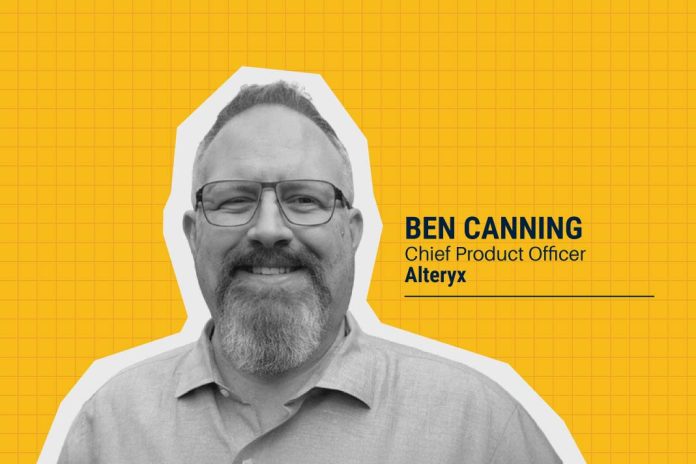
When Alteryx hired Ben Canning as Chief Product Officer in 2025, it brought in a leader with two decades of experience shaping how knowledge workers collaborate around information — from Microsoft Teams and SharePoint Online to Smartsheet — to steer that strategy. Now, as CPO at Alteryx, he’s applying that lens to a different problem: what it really takes to make enterprise data “AI‑ready” and turn analytics into trusted, repeatable systems rather than isolated projects.
Alteryx has been positioning its Alteryx One platform and “AI Data Clearinghouse” concept as a way to unify analytics and AI on governed, enterprise‑grade data, while layering in generative AI, Magic Reports and tools like Ask Alteryx to speed up workflow creation. Ahead of the Alteryx Inspire 2026 conference, where these ideas are under the spotlight across keynotes, the Executive Summit and an expanded virtual programme, AI & Data Insider spoke with Canning about how he is thinking about speed versus governance, what AI‑ready customers are doing differently, and where the product is headed next.
Even in a short exchange, three themes stand out: AI must live inside governance, not around it; AI‑ready data starts with process maturity; and the next wave of product work is about wiring business logic into agentic systems that can actually drive action.
Building Speed Inside Governance with Ask Alteryx
AI & Data Insider: How are you thinking about the balance between speed and governance with Ask Alteryx – for example, letting AI generate entire workflows in under 90 seconds versus the need for robust review, testing and governance before anything touches production data?
Ben Canning:
Balancing speed and governance has been a core design principle for Ask Alteryx from the start. Generating a workflow in under 90 seconds is incredibly powerful. But only if people can still trust, govern, and explain what gets built.
Ask Alteryx accelerates the blank‑canvas part of analytics development, but the workflows never leave the Alteryx environment. All the existing controls around lineage, permissions, versioning, and governance still apply. AI isn’t bypassing the rules — it’s helping analysts build inside them faster.
Speed is one side of the coin but it’s also about giving analysts and knowledge workers access to expert‑level workflow design guidance. Ask Alteryx can proactively flag risks, surface missed issues and recommend more efficient approaches. This further bolsters governance as well as accuracy.
ALSO READ: Alteryx Inspire 2026: Three Questions Every Data Leader Should Take to Orlando
AI‑ready Data as a Process Maturity Project
Alteryx has been talking a lot about “AI‑ready data” — not just as a technology problem, but as a way of describing the organisational state needed for trusted AI and analytics. Canning’s answer suggests that in practice, the fastest‑moving customers are thinking less about AI features and more about codifying how work gets done.
AI & Data Insider: Inspire Virtual highlights customers like Charlotte Pipe & Foundry and Papa John’s using Alteryx One to scale analytics and move from spreadsheets to governed, repeatable workflows. What patterns are you seeing across these early “AI‑ready data” customers that others can learn from?
Ben Canning:
The pattern I keep seeing is that the companies making the fastest progress with AI didn’t start with an AI project. They started by fixing a process problem.
Customers like Charlotte Pipe & Foundry and Papa John’s invested in making their workflows repeatable, and governed, with clear ownership from the business teams that actually understand how the work gets done. That part matters a lot, because central IT teams usually don’t have all the operational context needed to define that logic.
That’s really the big lesson around AI‑ready data. AI readiness isn’t just a data infrastructure project. It’s a process maturity project. But business processes are constantly in flux, so projects can’t be seen as one and done. The best response to this is codifying business logic into trusted workflows with a flexible system that empowers teams to evolve workflows as processes change without raising a ticket with IT every time. That’s how AI readiness and acceleration become a constant force.
From AI‑ready Data to AI‑powered Outcomes
With Alteryx expanding its generative AI capabilities — from Magic Reports in Auto Insights to AI‑assisted data preparation and design‑pattern guidance for GenAI in analytics — the obvious question is what comes after that initial wave of features.
AI & Data Insider: You’ve talked about moving from AI‑ready data to AI‑powered outcomes, with new capabilities like Magic Reports, GenAI tools and AI‑assisted data prep. After Inspire 2026, what are the next one or two big bets you’re making in the product – the ones you expect customers to feel most strongly in the next release cycle?
Ben Canning:
The biggest bet we’re making is on new capabilities that put business logic to work to enhance the impact and relevance of AI agents, helping customers move from AI‑generated insights to AI systems that can actually drive action. That means making it much easier to connect Alteryx workflows into agent‑driven environments while working directly with governed enterprise data where it already lives.
The second big focus is a continuation: governance and trust. The Alteryx platform already acts as a safe, trusted environment for building analytics automation workflows in accordance with governance principles. We need to build on this as demand for enterprise‑grade analytics grows. The need for centralised control over sensitive credentials and tooling to add discipline to how analytics assets are developed, versioned, tested, and deployed will both be addressed in upcoming product launches.
For product leaders and data executives, Canning’s answers reinforce a pattern that runs through his own career and Alteryx’s current roadmap: AI is most useful when it’s embedded in the mundane but critical parts of work — permissions, versioning, process ownership, and business logic — rather than bolted on as a separate “AI project”.
As Alteryx showcases Ask Alteryx, Alteryx One and its broader AI‑ready data story at Inspire 2026, AI & Data Insider will be following how these themes show up in real deployments and leadership discussions — and what they imply for organisations trying to move from experimentation to governed, agentic analytics at scale.
ALSO READ: Inside IBM’s 11 Billion Dollar Bet: What the Confluent Deal Reveals About AI’s Investment Paradox
Organising an AI or analytics summit and looking for an independent media partner to translate it for the boardroom? Reach out to AI & Data Insider to explore a press collaboration. Write to us at editorial@aidatainsider.com