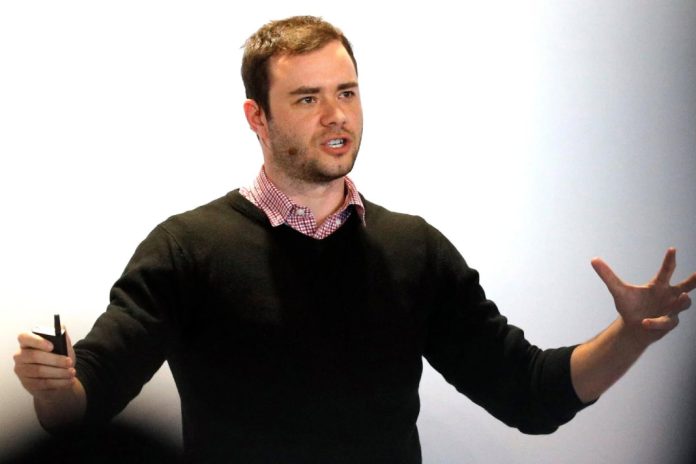
Former OpenAI researcher and Tesla’s former AI director Andrej Karpathy has announced that he has joined Anthropic, marking a notable talent shift in the intensifying AI race between major frontier labs.
In a post on X, Karpathy said, “I think the next few years at the frontier of LLMs will be especially formative. I am very excited to join the team here and get back to R&D.”
Since his departure from OpenAI, Karpathy has remained active in AI education, particularly through widely watched YouTube lectures and technical explainers, where he broke down complex machine learning concepts for developers and researchers.
His educational work helped cement his reputation as one of the AI industry’s most influential communicators beyond research itself.
In 2024, he founded Eureka Labs, an AI-focused education startup focused on building learning experiences around machine learning and large language models, including its flagship LLM101n course.
While Karpathy did not reveal specifics regarding the future of Eureka Labs, he indicated that his educational work is only paused, not abandoned, writing: “I remain deeply passionate about education and plan to resume my work on it in time.”
According to a report from Axios, Karpathy is set to help Anthropic launch a new team focused on pretraining research using Claude’s AI models.
Karpathy is widely credited with popularising the term “vibe coding,” which he coined to describe a style of software development where users build applications by describing what they want in natural language and letting AI generate much of the underlying code.
The term has since become shorthand for a new wave of AI-assisted app building enabled by platforms such as Replit, Lovable, and similar tools that allow users to create software through prompts rather than traditional coding workflows.
Karpathy also recently drew attention for his open-source project AutoResearch, a lightweight autonomous AI experimentation framework that lets AI agents run and evaluate machine learning experiments automatically on a single GPU.
The project, published on GitHub, became one of the more widely discussed examples of Karpathy’s broader vision for AI-assisted research workflows, with agents iterating through experiments, selecting improvements, and committing changes with minimal human intervention.
Karpathy’s move to Anthropic carries symbolic weight because one of OpenAI’s founding researchers is now joining a rival AI company established by former OpenAI executives, including siblings Dario and Daniela Amodei. Karpathy is generally described as a founding member or founding researcher of OpenAI.
“I think the next few years at the frontier of LLMs will be especially formative,” Karpathy said while announcing his move. He is joining a company that in recent months has increasingly focused on AI models built for software development, an area closely aligned with Karpathy’s own interests, reflected in several coding and AI-assisted development projects he has shared on X.
ALSO READ: The Playground is Closed: 10 Hard Truths from the Cisco AI Summit